2025 Annual Report
2025 Annual Report*
*The 2025 Annual Report was presented to the District's Board of Directors as the January 2026 Staff Report.
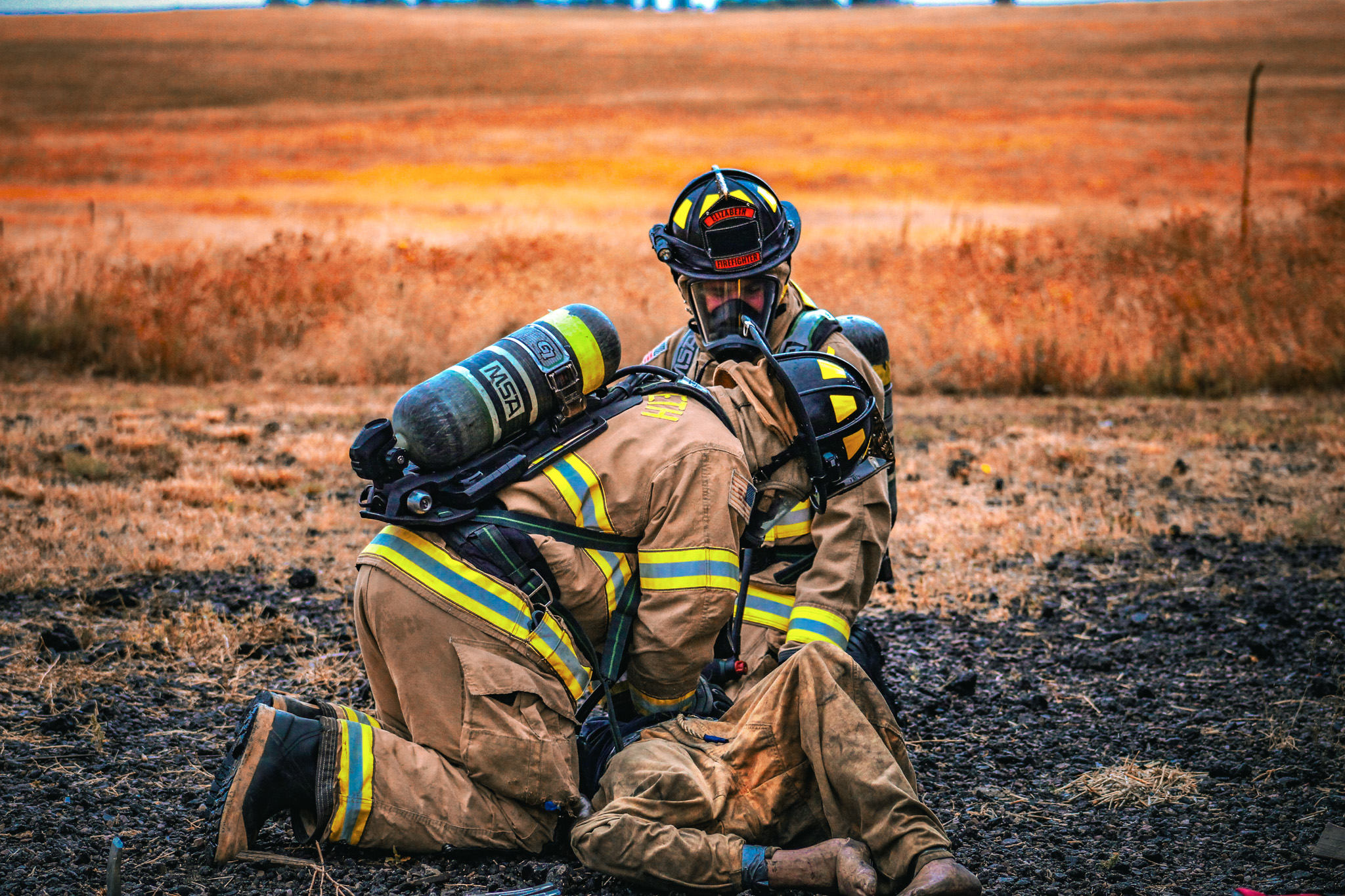
Photo of Elizabeth Fire crews during live burn training
Fire Chief's Report
2025 Year in Review
Elizabeth Fire can never be accused of standing still for too long, and 2025 made that clearer than ever. We began the year intensely focused on preparing for a May tax initiative—an effort that unfortunately failed due to low voter turnout. In hindsight, a November election would likely have produced a better outcome. Based on the information we had at the time from the Governor’s Office and the Colorado State Fire Chiefs, it appeared that May offered the stronger path to success. Trusting that guidance turned out to be the wrong call, and I accept responsibility for that. Lesson learned.
Despite this early setback, I watched our crews and leaders display unwavering resilience, professionalism, and dedication to providing exceptional service to our community. Together, we developed and implemented a resiliency plan that allowed us to reduce services in a strategic and responsible way while minimizing the impact to our customers.
It is clear that the district must pursue new and sustainable funding sources to maintain the level of service our community expects and deserves. Even with internal and external challenges, 2025 was a year of significant progress.
Key Accomplishments
- Achieved our goal of 24/7 staffing at Station 272, maintaining continuous coverage 100% of the year.
- Continued implementing our succession plan to prepare for future retirements and leadership transitions.
- Finalized and updated the Employee Handbook, ensuring district policies protect both our members and the organization.
- Expanded employee benefits, including salary, healthcare, and retirement improvements.
- Reorganized administrative positions to allow members to focus on strengths and deliver high‑level performance in specialized areas.
- Completed major infrastructure and facility improvements, addressing issues that had lingered for years.
- Designed and purchased two additional suppression units to improve capabilities in WUI areas.
- Delivered extensive leadership training for our developing staff as well as neighboring agencies.
Calls for Service Analysis
We closed 2025 with 1,604 calls, a 6.5% increase from 2024. Contributing factors include population growth, an aging community, and an increased volume of automatic aid responses to Franktown Fire. We are actively evaluating ways to either reduce those responses or ensure the aid system is balanced and equitable for both agencies.
Correspondence
Our community was exceptionally supportive over the holiday season, especially neighbors near our stations and administrative offices. Their cards, gifts, and conversations are deeply appreciated. Genuine community feedback is invaluable, and we are always grateful to receive it.
Succession Planning
A major focus for 2025 was strengthening our succession pipeline and preparing the next generation of leadership. I’m proud to say we met most of our goals. With several leadership transitions on the horizon, members will continue to see movement as we train and prepare internal candidates. Many personnel are already serving in acting positions, working closely with supervisors, and the Chiefs continue to share responsibilities to broaden each other’s operational and administrative experience.
My priority remains clear: to cultivate capable, well‑prepared internal candidates for every future leadership role.
Purchasing Committee
2025 marked the first full year of operating as a Purchasing Committee rather than an apparatus-only committee, and the results were impressive:
- Purchased a Type 1 engine using a stock-design model with cost‑efficient modifications, saving over $250,000 and reducing delivery time by 50%.
- Purchased a Type 3 engine using similar concepts, saving over $200,000.
- Secured a new Type 1 ambulance funded 50% through the EMTS grant program.
- Developed specs for a new Battalion Chief vehicle, including the ability to plow snow for emergency response access.
- Designed and acquired equipment necessary to sustain our technical rescue program.
Strategic Planning
While the tax initiative forced us to pause progress on our strategic planning update, our existing plan remains active and relevant. We continue to meet major benchmarks, and I anticipate resuming full strategic planning efforts in 2026.
Elbert County Communications Authority (ECCA)
ECCA experienced a substantial transition in 2025 following the retirement of Jim White, who had effectively managed the organization. A new manager has been hired, and member agencies are deeply engaged in discussions about operational changes. A key priority is removing ECCA from the “radio tower business” to reduce long‑term capital costs.
Chief Gerczynski is partnering with the finance manager to redesign the budget format to provide clearer, more accurate tracking of expenditures.
ELCO Fire Chiefs
The ELCO Chiefs will face a demanding year ahead. Activity within the group has slowed, and it’s time to refocus efforts—especially with new legislation and ongoing county-level challenges, including the recent push for countywide building codes without a fire code component.
Despite these obstacles, the Chiefs remain united. With 5 of the 7 Chiefs in the county expected to retire within five years, we are actively discussing long-term solutions, including potential regional consolidation or the creation of a health services district to support ALS ambulance services and expand healthcare access.
Legislative Update
There are rumors that the State Chiefs may propose a statewide ballot initiative intended to address fire service funding gaps. Current strategy discussions involve retaining revenue from sales tax refunds to strengthen existing programs. It is unclear how or when these efforts will benefit Elizabeth Fire, but I remain hopeful the state will follow through on commitments to “make it right” for local districts.
Last year’s legislative changes significantly harmed fire districts statewide, and their impact will likely persist unless a comprehensive solution is developed.
Our white paper for Eastern Colorado Fire Districts generated significant statewide attention in 2025. The Colorado Fire Commission established the COFIRE Subcommittee in response and appointed me as Chair. Our mission is to conduct a statewide analysis and propose solutions to the mounting sustainability challenges facing rural fire districts.
Based on early findings, statewide needs, including suppression, training, and recruitment—could exceed $100 million. This doesn’t even address the EMS crisis that still remains. We will have to determine how this model would look for Colorado and also how we can integrate the EMS issue into the plan.
Division Chief
Prevention/Administration
The Prevention Division continued to play a critical role in safeguarding the community through proactive risk reduction, regulatory enforcement, and public education. This year’s work reflects a balanced approach to supporting development growth, maintaining high inspection and plan review standards, and strengthening community partnerships. Through close collaboration with builders, businesses, schools, and local organizations, the Division advanced its mission of preventing emergencies before they occur while ensuring that new and existing structures meet the fire and life safety needs of a rapidly evolving district.
The Prevention Division’s work generated revenue that surpassed projections this year. A total of $259,000 in developer contributions from the Independence Subdivision was collected, which is 345% above budgeted expectations. Of this amount, $175,000 supported transitioning Station 272 to full-time operations until Hancock Parkway connected to CR 166 and the remainder due to higher gift agreement contribution fees. Permit fee revenues generated $19,000, finishing 196% above projections due to larger construction projects that required specialized reviews and inspections.
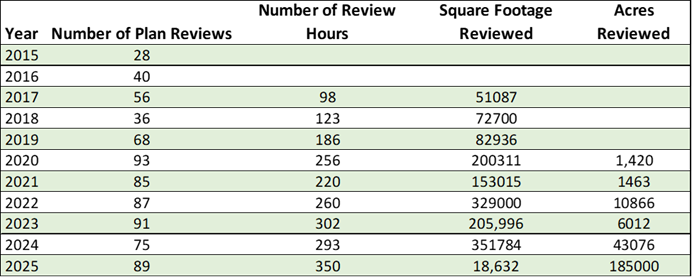
Photo of graph showing different prevention statistics from 2015-2025
The Prevention Division remained busy throughout the year driven by sustained development activity and increasing community safety demands. We started reviewing residential BESS (Battery Energy Storage Systems ) for compliance with new code requirements. This emerging technology has inherent fire risks that are being mitigated through the review and inspection process. The Division also continues to conduct inspections of residential and commercial construction sites to ensure compliance with applicable codes. Given the nationwide increase in construction site fires in recent years, safeguarding these sites remains a critical priority for the District.
Existing Building Inspection Program:
- 170 inspections were assigned to the company officers:
- 73 required re-inspection, with 10 requiring multiple visits.
- Only 5 were referred to the bureau for compliance.
- Self-Inspection Program: 58 businesses participated in the self-inspection program with a 71% completion rate.
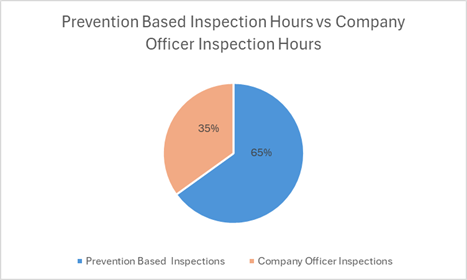
Photo of graph showing Prevention Based Inspection Hours vs Company Officer Inspection Hours: Prevention Based Inspection Hours 65%, Company Officer Inspection Hours 35%
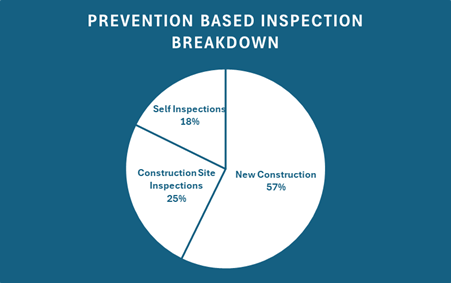
Photo of graph showing Prevention Based Inspection Breakdown: Self Inspections 18%, Construction Site Inspections 25%, New Construction 57%
The Prevention Division continues to prioritize community engagement and fire prevention education as core components of its mission. District crews facilitated reading sessions at Singing Hills Preschool and Running Creek Preschool, and additional station tours for local schools and Boy Scout groups further strengthened community partnerships while promoting essential fire safety practices.
In addition, the District was awarded a Wildfire Restoration and Mitigation Grant through the Colorado State Forest Service in the amount of $582,750.00. This grant provides a 50% match for eligible homeowners and homeowner associations to support wildfire mitigation efforts. The District has three years to allocate and utilize these funds.
Finance and Human Resources
At the beginning of the year, we worked on a contract with Independence to get Delbert Road, which runs through the development, completed by the middle of the year. We received $175,000 to be used for more staffing to open Station 272 24/7. Once the road is completed, we can keep Station 272 open with new homes going into Independence with the property taxes that will be collected once the homes are completed and occupied.
We were able to collect 71% over budget in interest income due to investing in the term investments with CSIP.
The District went for a sales tax initiative in May of 2025. This cost the district over $80,000 but was not successful due to not having enough information to educate our citizens on this needed tax.
We had 3 full-time people resign this year. We were able to promote from our part-time program to fill these positions. In addition, we were able to hire 3 more paramedics to even out the shifts with the same number of paramedics.
In our reserve program, we were able to add 13 reserves throughout the year, though we did lose 10 to other agencies.
At the end of 2024, we developed an Administrative Assistant Intern position. We were able to hire a high school student at the beginning of 2025, and they have been working out perfectly for what we needed. With the creation of this position and how well it is working out, we can change around a few things in HR to create a position that is more forward facing for our staff. We have created a position called the “Employee Engagement Specialist.” We were able to promote our HR Generalist to this position to start at the beginning of 2026.
For 2025, we budgeted our mil levy at our base rate of 13.71. We collected about 98% of this levied tax. There were abatements of about $107,000 that we will collect in 2026.
In 2025, we ordered 2 new engines that will be delivered in 2026. We ordered a Type 1 and 3 engine. These 2 vehicles will be leased for 5 and 10 years. We received a grant for a new medic that we also ordered this year, which will be delivered in 2026.
The District applied for a grant for new wildland boots for all full- and part-time employees. These boots were purchased and distributed this August.
We had 3 employees sign up for paramedic school this year. One of these employees completed this year. This employee also applied for a grant with the state to fund 50% of their paramedic education, which we will receive the money for in 2026.
This year, the District was able to pay off the leases on our 2 chief vehicles that were purchased in 2023 and 2024.
Our fund balance at the end of 2025 should grow about 6% from 2024. This puts us in a great position for the next couple of years.
Battalion Chief of Operations
Key Metrics
- Calls for Service: 1,604 calls. Increase of 97 calls from 2024
- Fire Loss: $766,433
- 0 civilian deaths. 0 FF deaths. 1 minor FF injury.
- Auto/Mutual Aid Given: 200
- Auto Mutual Aid Received: 55
Apparatus & Fleet
New Purchases:
- Type 1 Engine ordered with an expected May 2026 delivery date.
- Type 3 Engine ordered with and expected March 2026 delivery date.
- New Medic ordered with an expected June 2026 delivery date.
- New Battalion pick up ordered with an expected January 2026 delivery date.
Major Repairs:
- TRV rebuilt.
- Engine 273 overhaul completed.
- Reserve Engine turbo repaired.
Operational Improvements
- CAD Updates: New call types (MVC Crash Detection, Elevator Rescue, Train Derailment, Multi-Family Fire); response plans created.
- CAD-to-CAD Integration: Ongoing delays; testing continued throughout year. No news on final integration date.
- Implemented new RMS to the First Due platform. NFIRS reporting switched to NERIS on Jan. 1.
Safety & SOP Enhancements
- New SOPs: Rope Rescue, Natural Gas/Propane Emergencies, Special Event Calls.
- Active Shooter SOP rewritten as ASHER and aligned with judicial district standards.
- Gas Detection Upgrade: Ordered 5 new 5-gas monitors (adds HCN detection); $5,110 grant secured for additional units and calibration station.
Personnel & Training
- Tech Rescue Team expanded; monthly joint trainings with South Metro (vehicle extrication, rope rescue, RIT operations).
- Water Ops Program launched; 3 new members onboarded. 1 member trained and operating, 2 additional members still in training.
- Meritorious Service Awards program initiated.
Facilities & Infrastructure
Station 271 Upgrades:
- Parking lot repaved and striped.
- Bay doors painted.
- Bay door weatherstripping donated and installed.
- Lockers replaced with new steel ones.
- Mattress upgraded and replaced with twin size.
- Hot water heater added to restroom.
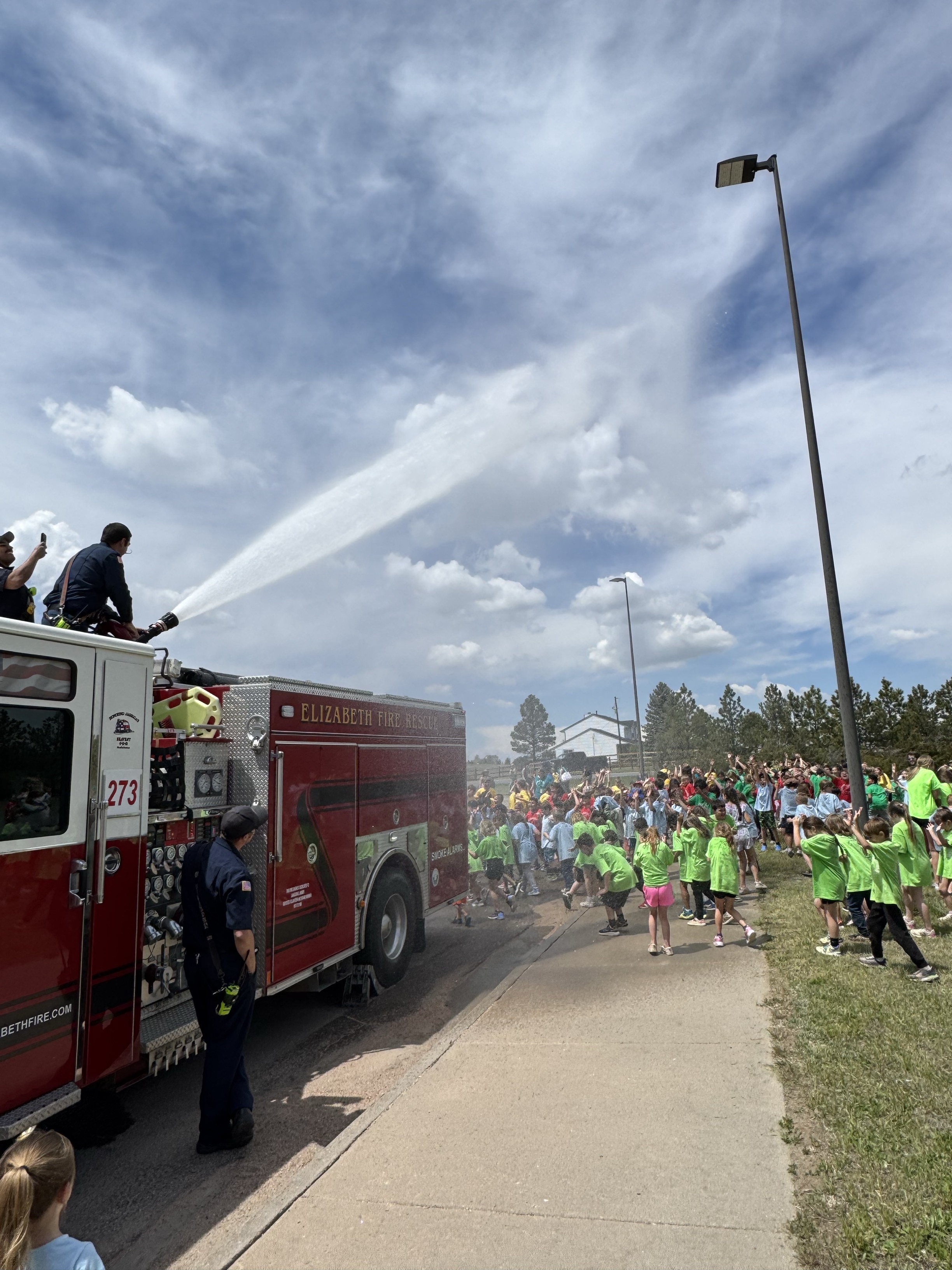

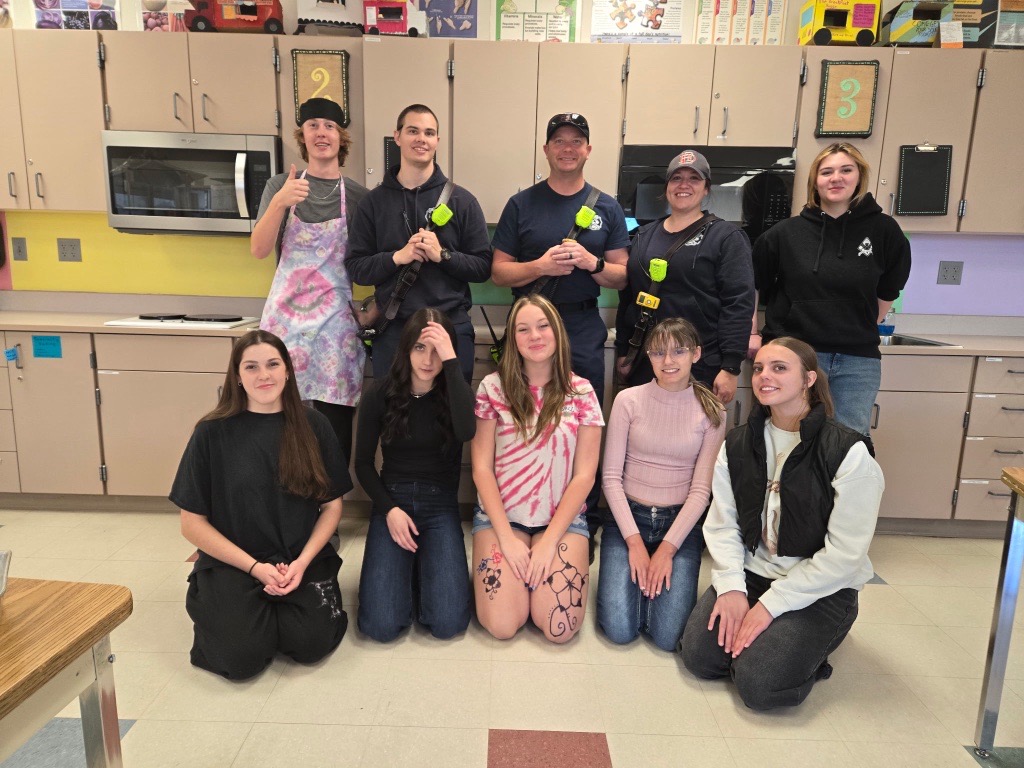
Photos of fire prevention activities throughout the year: school field day, station tours, and cooking classes
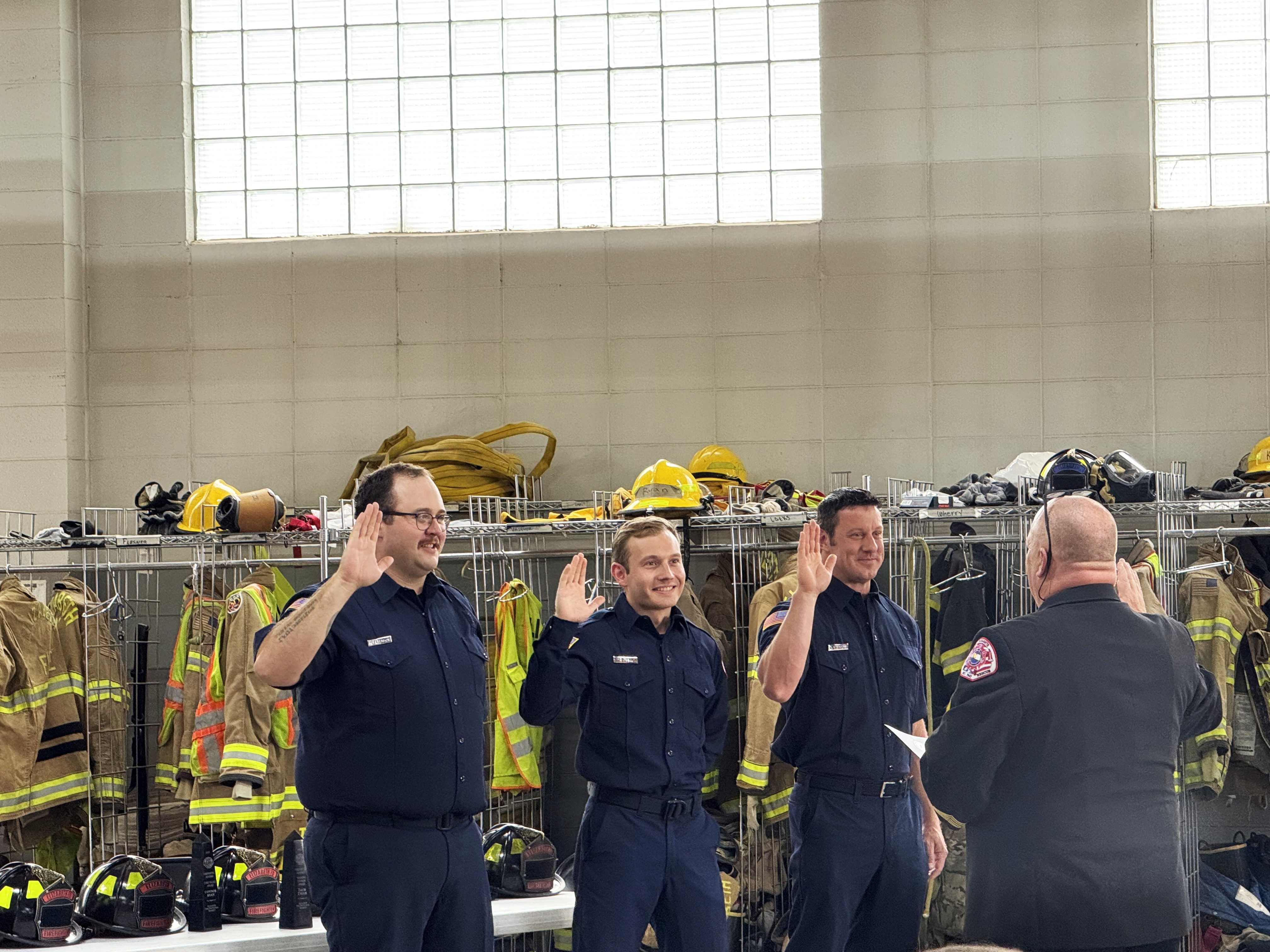
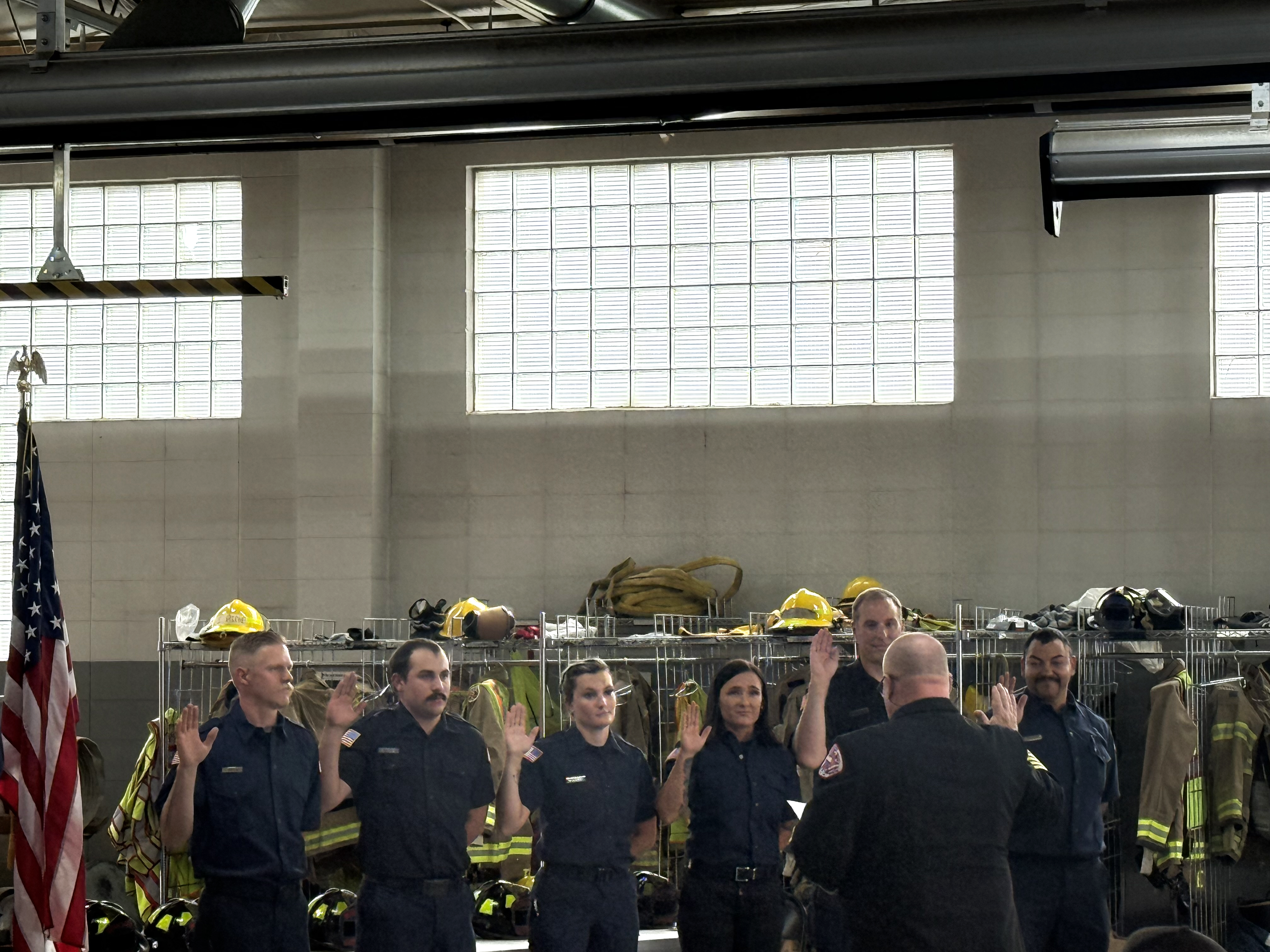

Photos from the District's academy graduation and pinning ceremony
Battalion Chief of Training
- The 2025 academy started with 8 cadets, and we graduated 5. Two of them received full-time offers from other agencies, and one of them resigned to focus on Paramedic School. This group was from Elizabeth Fire only this year, so we had a smaller group than we’ve had in the past. The cadets had a great academy, and we are enjoying watching them continue to progress.
- This academy was the first for all three STOs. They pulled off the difficult task of planning the academy in short time, and I appreciate the time and effort that each of them contributed.
- 2025 saw a lot of positive changes with policy and procedure with the DFPC. Prior to this year, recertifications happened every three years, and it has been changed to a 5-year cycle. The wait time to re-take written tests was changed from 30 days to 14. We also fought hard to implement change with the written HazMat test. The Colorado Fire Officers Training Association (CFTOA) spent most of 2025 fighting for change with this test. The failure rate statewide is incredibly high and something had to change. We explored a lot of options, and we ultimately voted to change the passing score from 80% to 70%. This change was not well received by the test committee and a number of agencies, but it was great to be part of an organization that has the power to make positive changes for our future firefighters and the Colorado fire service in general.
- As we do every year, we partnered with CSU for our cardiac health evaluations.
- Lt. McGhee spearheaded our first Public Service Academy in partnership with the Elizabeth Police Department. She had little time to prepare but still did an excellent job. The academy focused on our “home-grown” approach to recruitment and involved students from Elizabeth High School. We had four attendees, and we retained one of them as a Reserve member. Lt. McGhee has already been working on the 2026 academy.
- All three shifts were able to do live fire training at the Kiowa Training Center.
- Lt. Neisen did a great job with maintenance and upgrades to Station 272. This year, he was able to focus more on interior creature comforts as opposed to the infrastructure projects he did in 2024. To name a few, Station 272 now has a new kitchen table, kitchen/cooking supplies, and a stair stepper.
- We were disappointed to learn that the Behavioral Health Trust funding was reduced by 90% with very little notice this year. Previously, every firefighter in the state was granted up to $10,000 per year for mental health care. That funding was initially cut to $1000 for life, then changed to $1000 annually.
- Chief Mackall and I developed an interview process for a new ETO. We had great candidates and we were happy to appoint Paramedic Johnson to the ETO position.
- The STOs made a schedule for the year to host written and practical exams. They worked with the DFPC to have Elizabeth Fire host written exams at Station 271. This gives our members the opportunity to test at home and gives surrounding agencies the opportunity to test close to home. The practical exams are mainly for our own members, but who knows what BC Regan has in store for this process in 2026!
- Our members attended a wide variety of outside trainings this year. Although Sarah wasn’t thrilled, I exhausted the training fee and travel budget by October. Many of these trainings were directly linked to our Duty Descriptions, and our staff proved to us that they are planning for their future at Elizabeth Fire. There are far too many to list, but some of the outside training opportunities we had this year include:
- Chief Brown was able to get CORE Electric to come to Station 271 for a power line training.
- I worked with a pipeline company to schedule training for each shift. Unfortunately, they had to cancel 2 of the 3 sessions, and I never heard back from them to reschedule.
- B-Shift was able to attend a CDOT training on Traffic Incident Management. The session had representatives from EPD, ECSO, Public Works, and Road and Bridge.
- Mrs. Reeder (Lt. Reeder’s mom) taught a class on patients with Autism Spectrum Disorder.
- STO Navarro was able to get the DFPC Driving Simulation Trailer to Station 271 for three days.
- STO Sheikh attended a Haz Mat Tech class and obtained his certification.
- Chief Steck was finally able to get the Douglas County seasonal helicopter to train with our crews for wildland season.
- NFA, Lithium-Ion Battery training, Fire Officer I, Science to the Station, Fire Instructor I, Tactical EMS, Fire Leadership, and ICS.
- A total of 5967 training hours were logged for our staff.
Our staff earned the following 34 certifications from the DFPC this year:
- Firefighter I: 6 certifications
- Firefighter II: 6 certifications
- HazMat Awareness/Ops: 6 certifications
- HazMat Tech: 1 certification
- Driver Operator: 4 certifications
- Driver Operator/Pumper: 5 certifications
- Live Fire Instructor: 1 certification
- Fire Instructor I: 3 certifications
- Fire Officer I: 2 certifications
As I close out my final Staff Report for the Training Division, I want to wish BC Regan the very best as the new Training Chief. I know he will bring fresh ideas and will do great things for the Training Division. I can’t wait to see what he does; you are all lucky to have him lead you in Training. It’s been an honor to be in this position and I’m incredibly grateful for the opportunity. We have had, and do have, incredible STOs and a staff that is dedicated to their craft. I know I'm biased, but we truly do have the most well-rounded and dedicated responders that anyone could ask for. Bring on EMS!
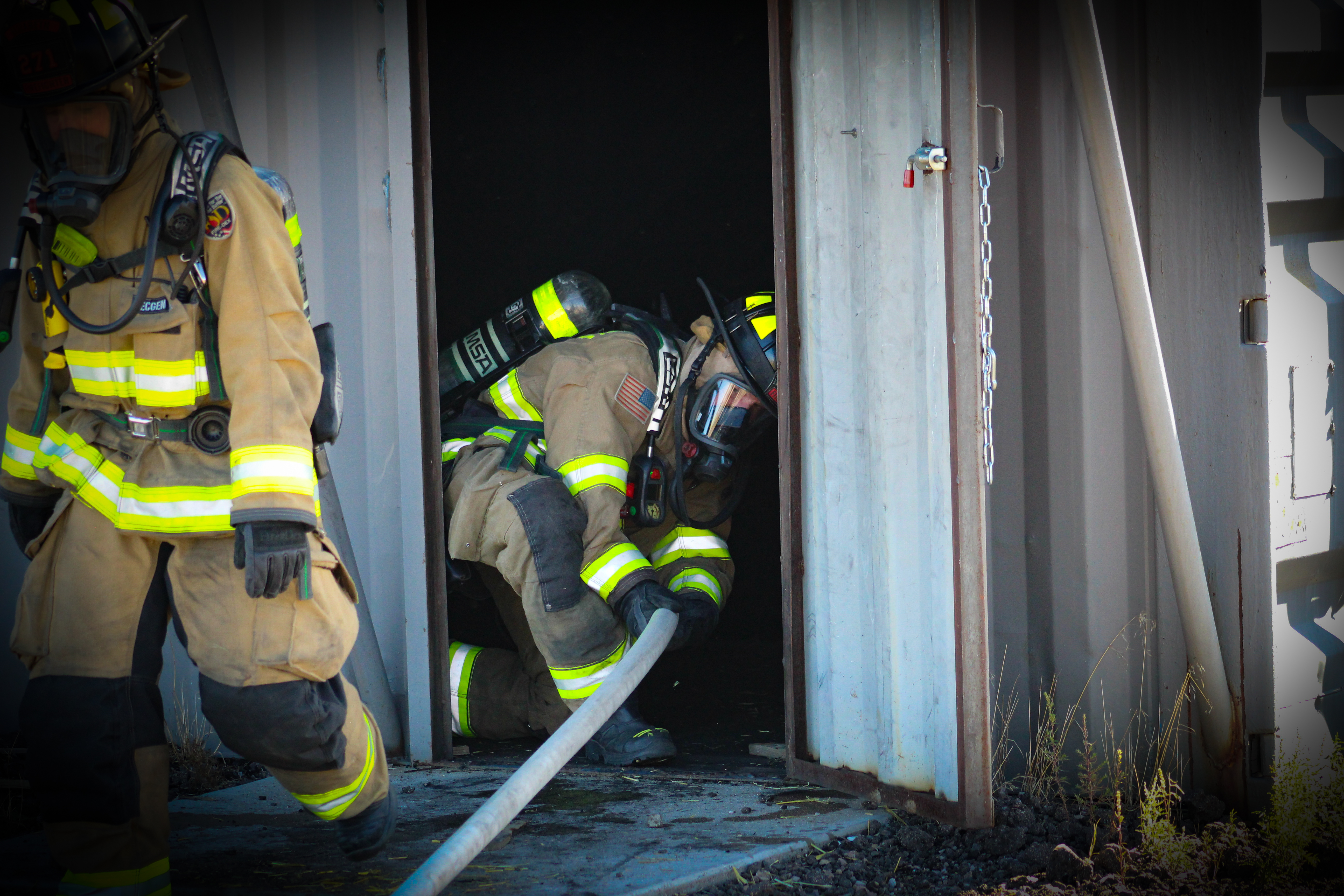

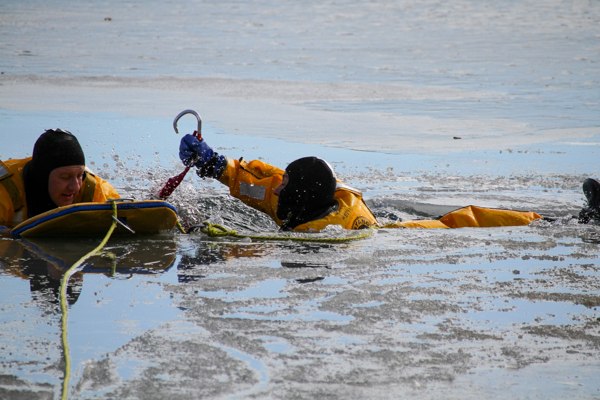
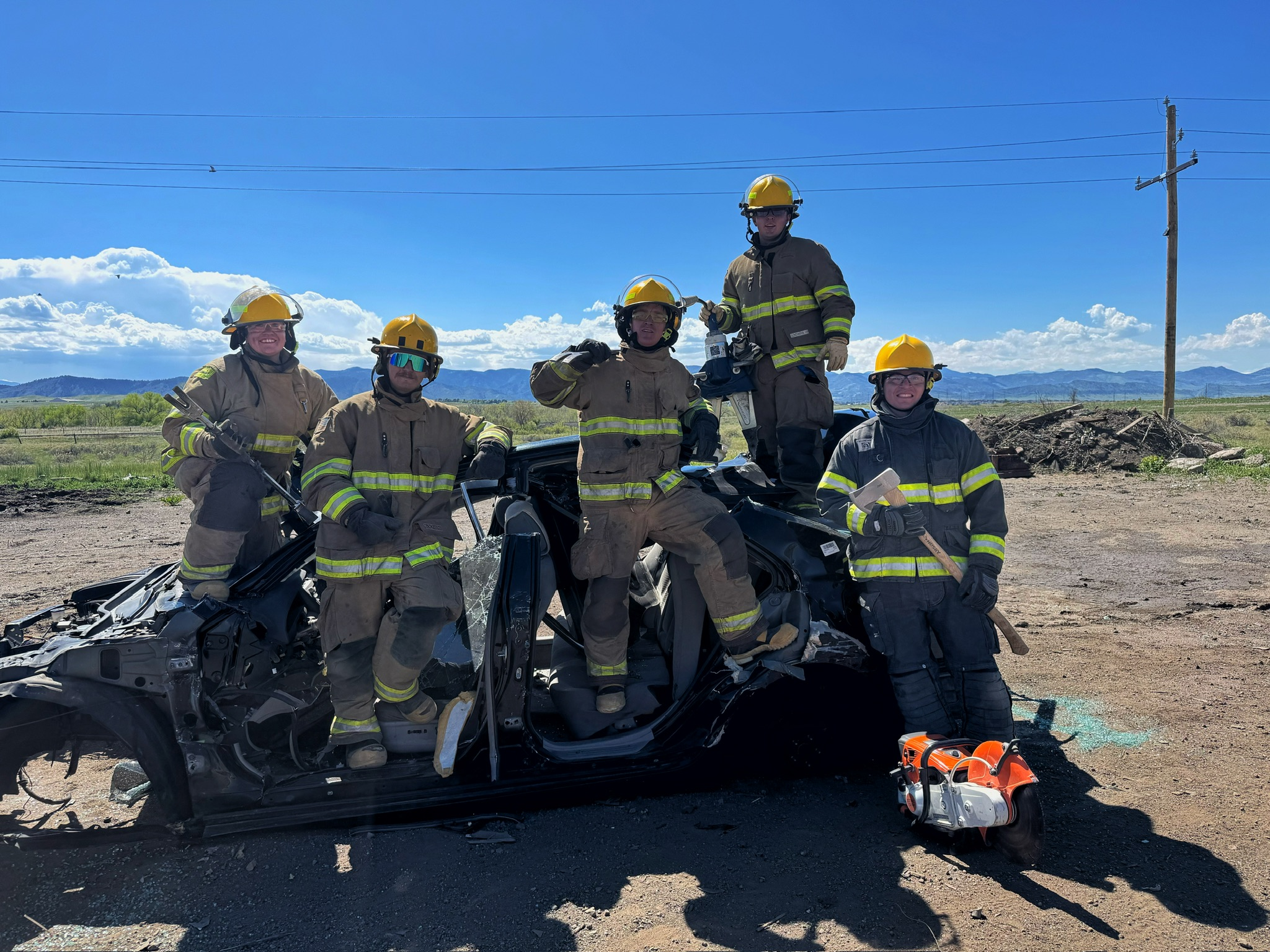


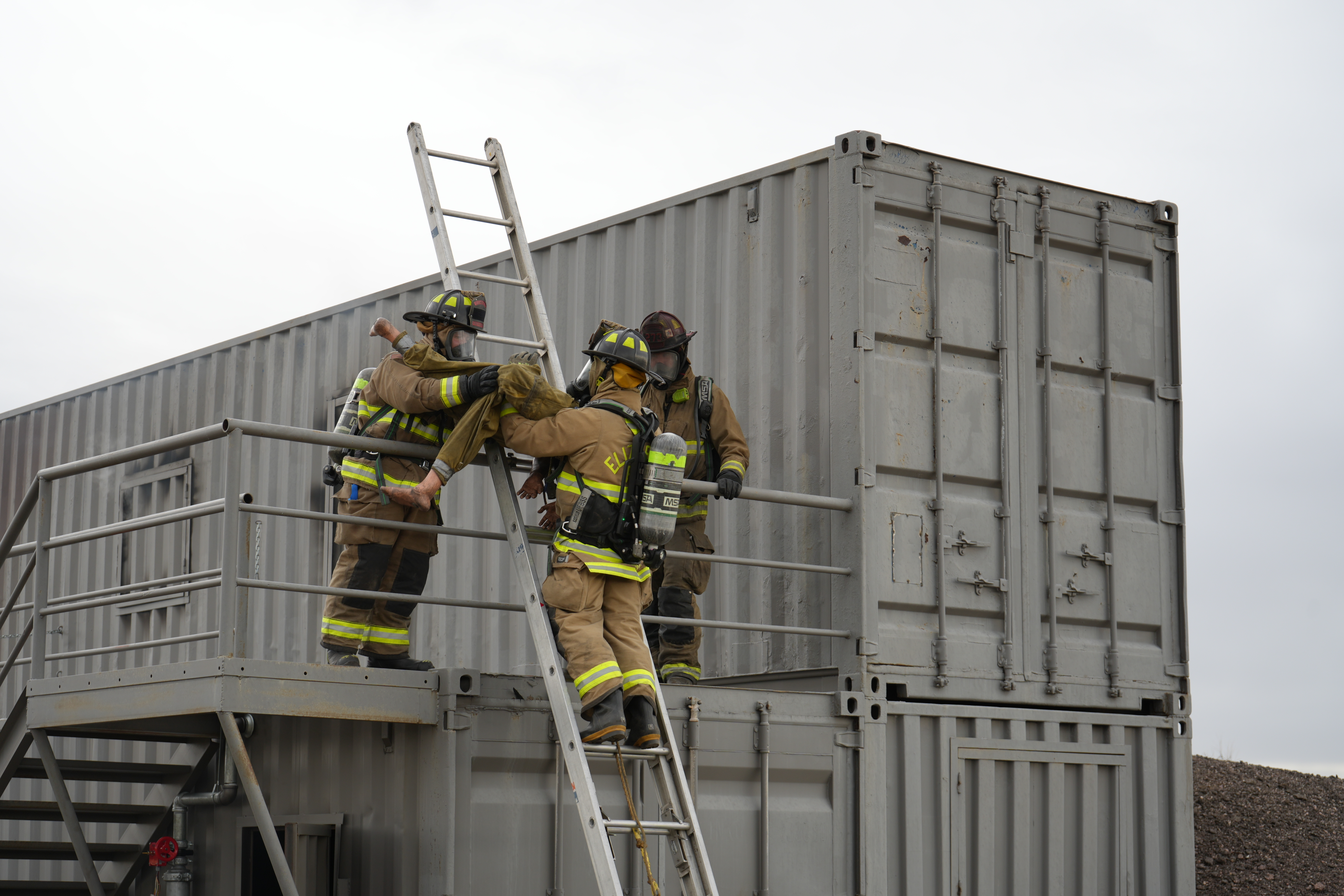
Photos of academy and trainings throughout the year
Battalion Chief of EMS
2025 EMS Recap
To the board: 2025 was our busiest year yet. I have highlighted a few of our accomplishments below, but this is by no means an all-inclusive list. We might not view the daily work and tasks we do as accomplishments; some are hard to even remember. It’s the sum of these small tasks that help grow and enhance our department to what it is today. Every one of the points below was accomplished as a team and would be impossible to achieve otherwise.
EMS:
- The department invested in our members by providing tuitional assistance toward EMS education, training, and certification courses to include: EMT and IV certification, AHA certifications, and state EMS conference training. We sent three members to paramedic school, two of which the department received grant funding support. Hayden graduated at the end of 2025, with Kurtis and Zach graduating in 2026.
- Ordered a new Type 1 ambulance that is scheduled for delivery mid-2026.
- Awarded 50% grant funding toward the purchase of four Stryker Auto-Load systems for all of our ambulances.
- Implemented the State "Narcan Leave Behind Program" to provide Naloxone to at-risk community members.
- First-In station alerting system installed and been a significant benefit to the health and wellness of our members!
- Paramedic Johnson was promoted to our new EMS training officer and been doing a great job to elevate our EMS program!
Staffing:
- Station 272 was staffed 365 days in 2025!
- Part-time employees worked a total of 12,812 hours.
- Reserves worked a total of 8,967.25 hours.
- 5,527 Hours of overtime worked.
Station 273:
- New station equipment - Kitchen refrigerator, bedroom lockers, station compressor, kitchen supplies, mattresses.
- Replaced and leveled transformer box in east lawn.
- Reorganized bay and gear storage to take advantage of available space.
- Added road material to fix erosion/drainage issues.
- Added soil to east lawn to improve drainage and life span of our new asphalt.
- New bay door springs installed on two doors (they're very expensive).
2025 EMS Statistics:
Total Incidents:
- 2024 = 1507
- 2025 = 1604 (+6.4%)
Calls by Shift:
- A - 509
- B - 564
- C - 530
Total EMS Incidents:
- 2024 = 852
- 2025 = 958 (+12.4%)
EMS Transports:
- 2024 = 592
- 2025 = 682 (+15.2%)
Transport Mileage:
- Total miles = 13,951mi
- Average = 20.5mi
Out of District Transports:
- 102 (15%)
Transport Acuity:
- BLS = 94 (14%)
- ALS 1 = 580 (85%)
- ALS 2 = 8 (1%)
Top 5 Provider Impressions:
- Abdominal Pain - 44
- Weakness - 38
- Acute Pain - 36
- Syncope - 28
- Seizures - 26
Transport Destinations with Alerts:
- Parker Hospital = 397 (Trauma-16, Sepsis-9, STEMI-11, CVA-9)
- Sky Ridge = 138 (Trauma-1, Sepsis-5, STEMI-1, CVA-5)
- Castle Rock = 105 (Sepsis-3, CVA-3)
- Sky Ridge South Parker = 30
- Children’s Main = 3
- Children’s South = 5
- Highlands Ranch = 1
- St. Francis = 1
- University = 1
TOTAL:
- Transports: 682
- Trauma Alerts: 17
- Sepsis: 17
- STEMI: 12
- CVA: 17
Dispatched Incidents by Ambulance Unit:
- MED271 – 519
- MED272 – 319
- MED273 – 59
I want to thank all our EMS providers for continuing to provide exceptional care to our community, we had some challenging calls again last year that were taken in stride. I’m so proud to work with such a skilled, compassionate, and empathetic group of professionals that continue to set the standard of EMS care throughout Elbert County. Thank you, and here’s to 2026!
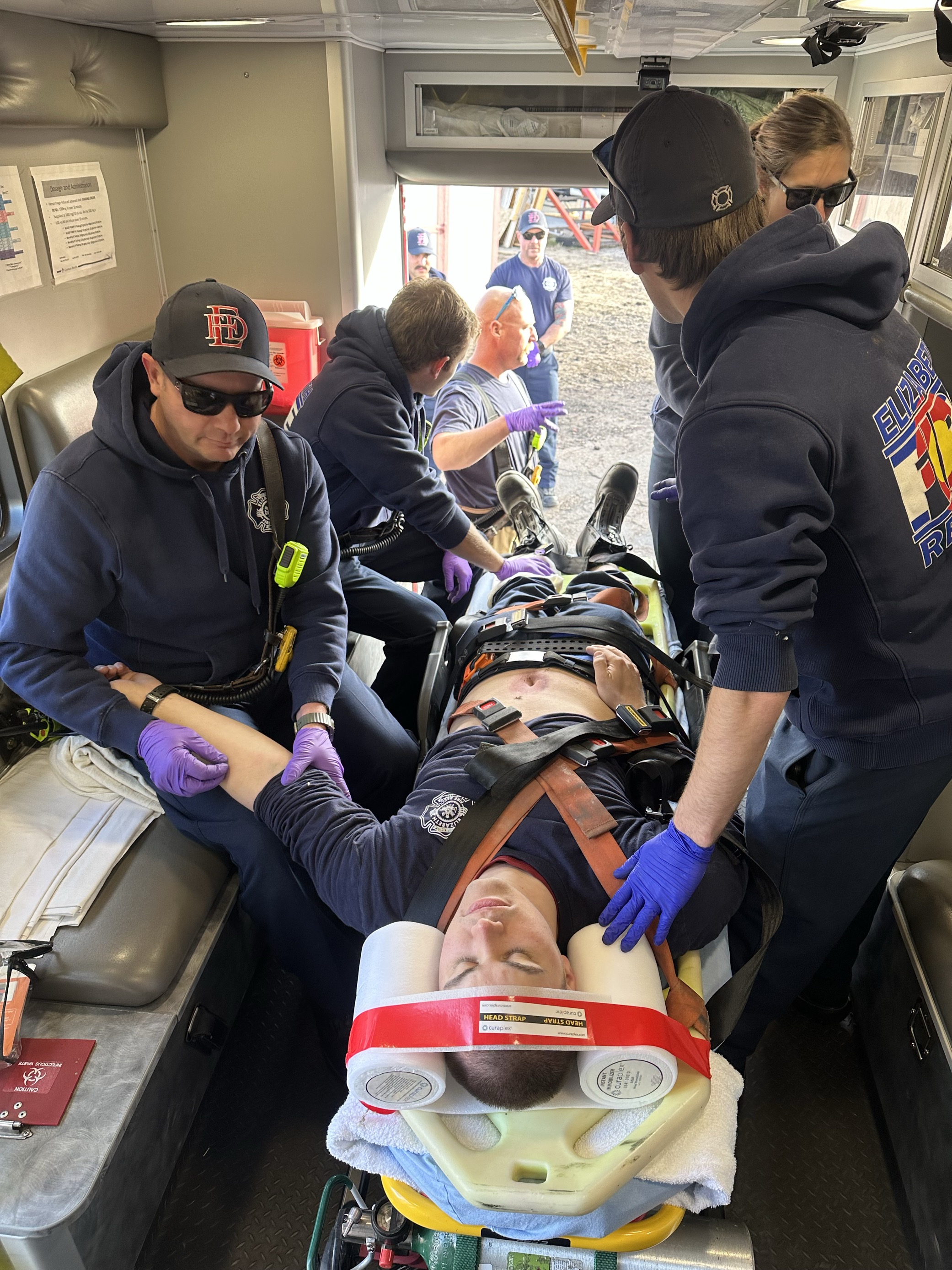
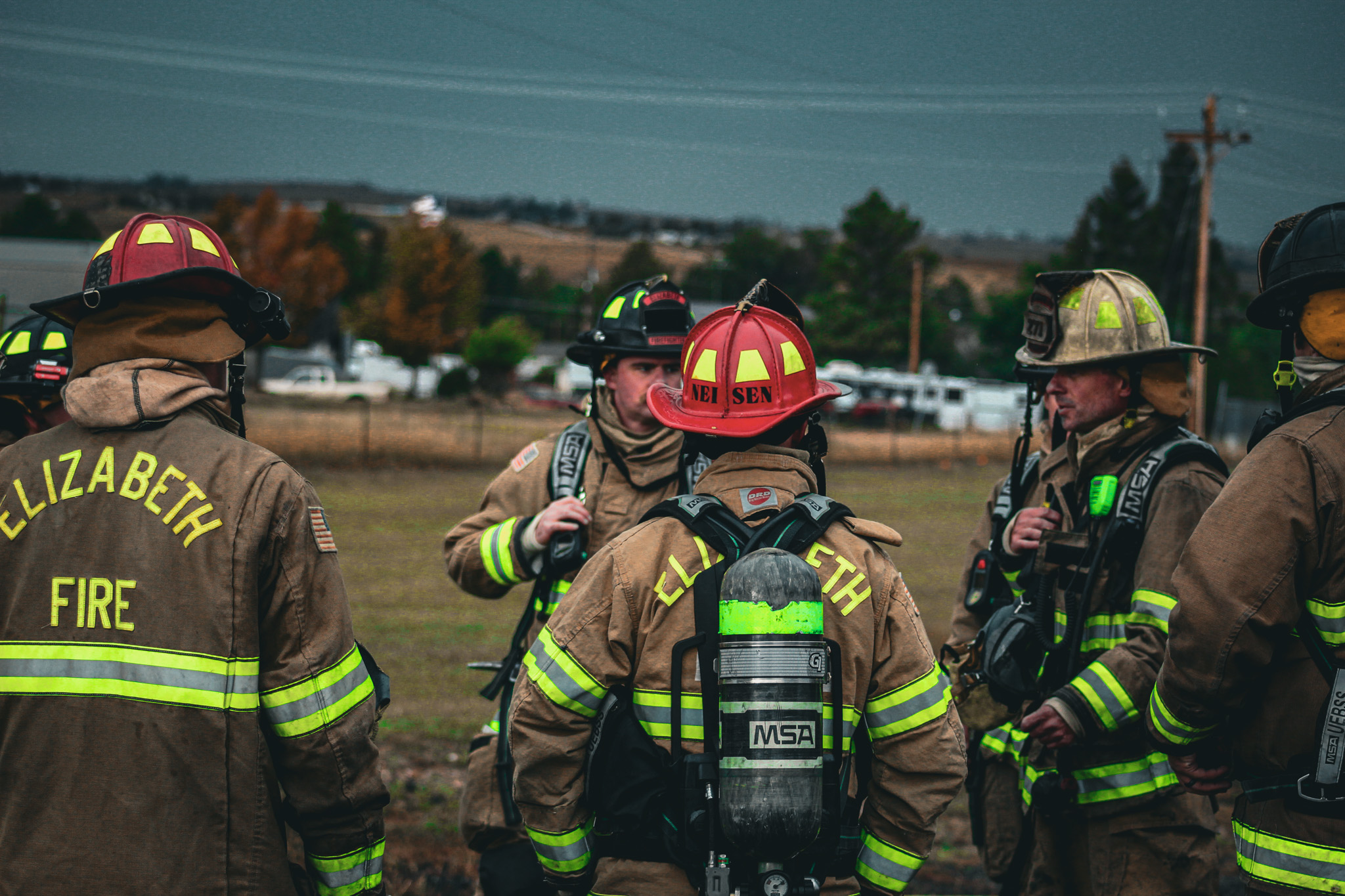
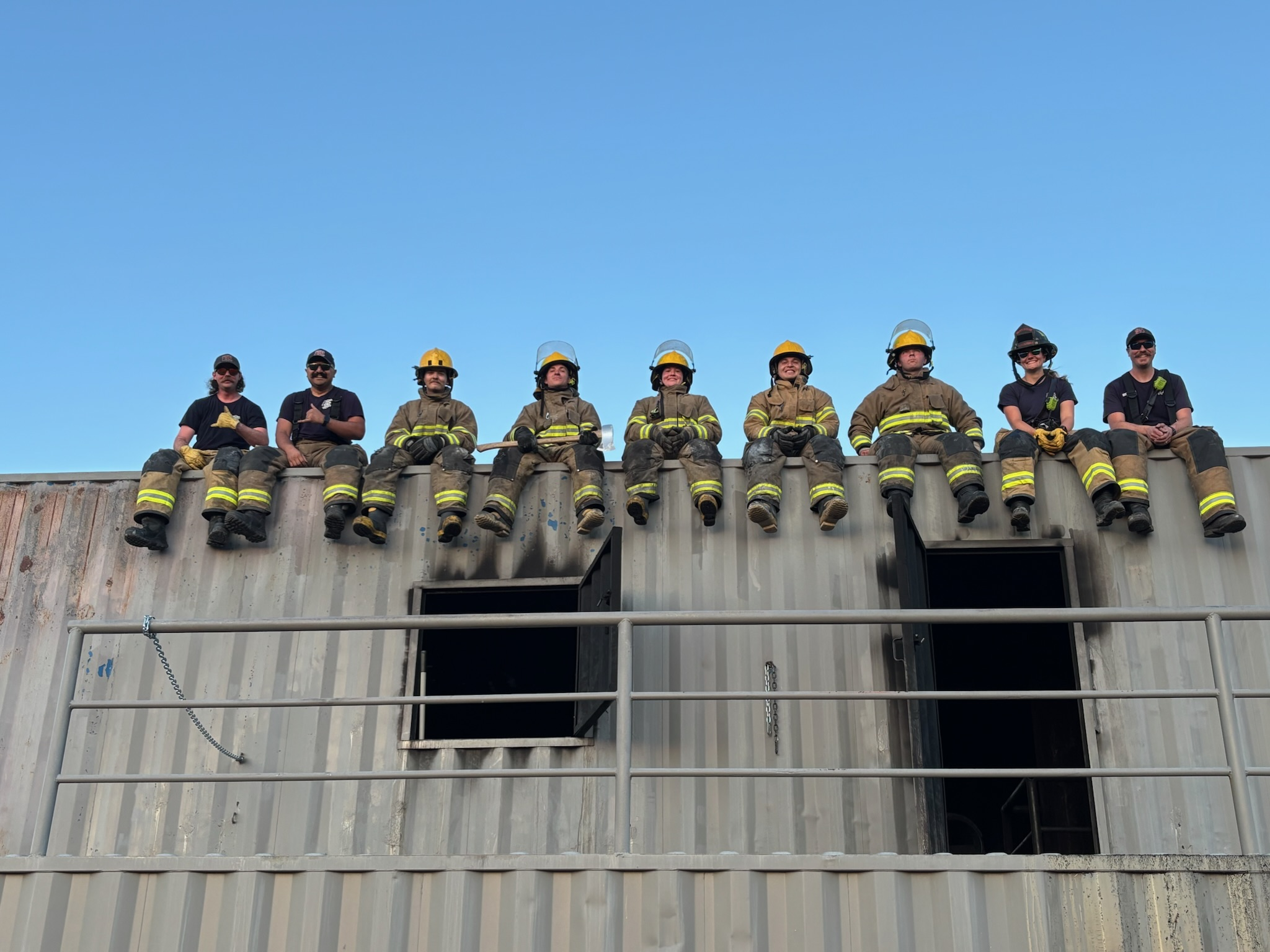
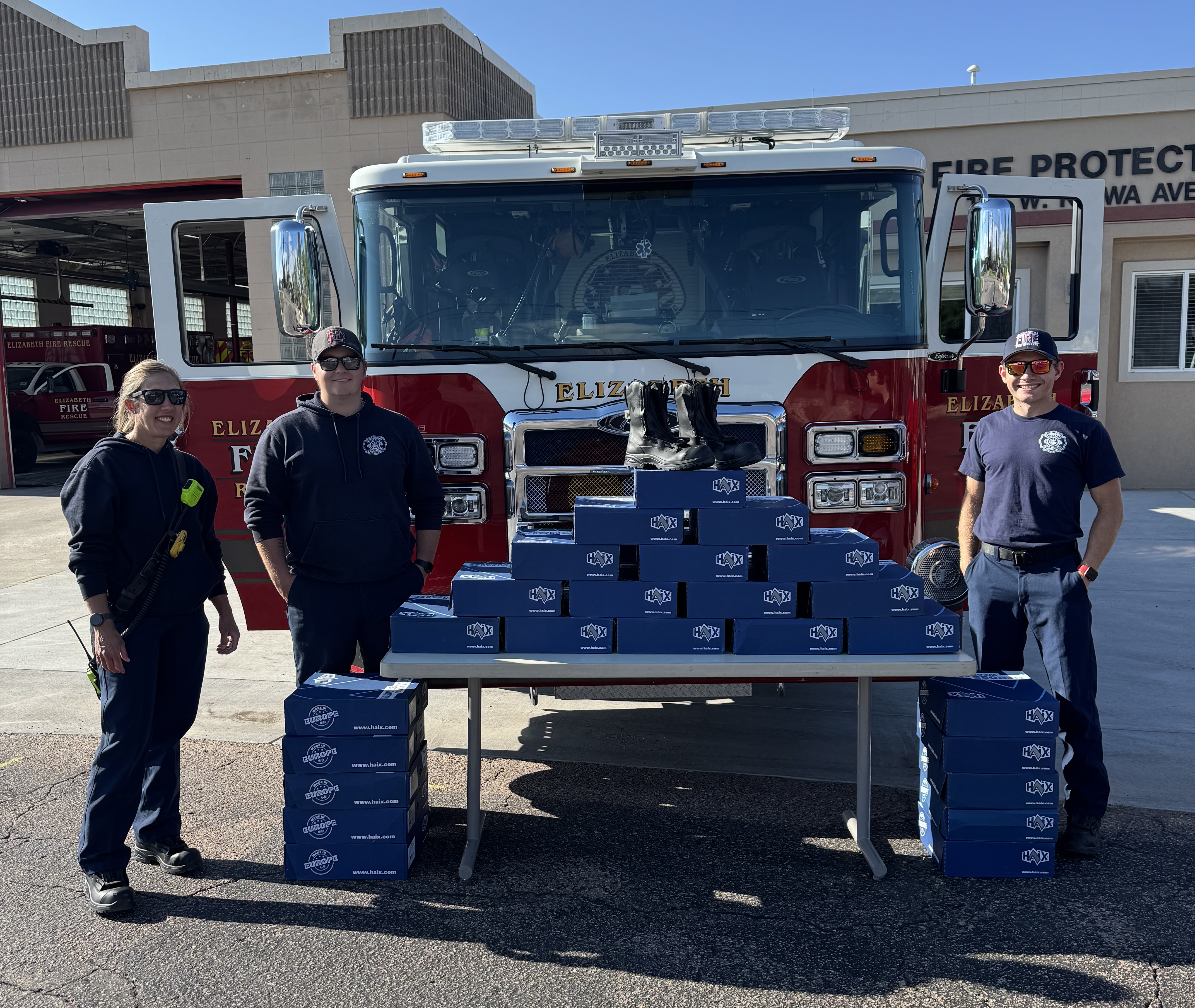


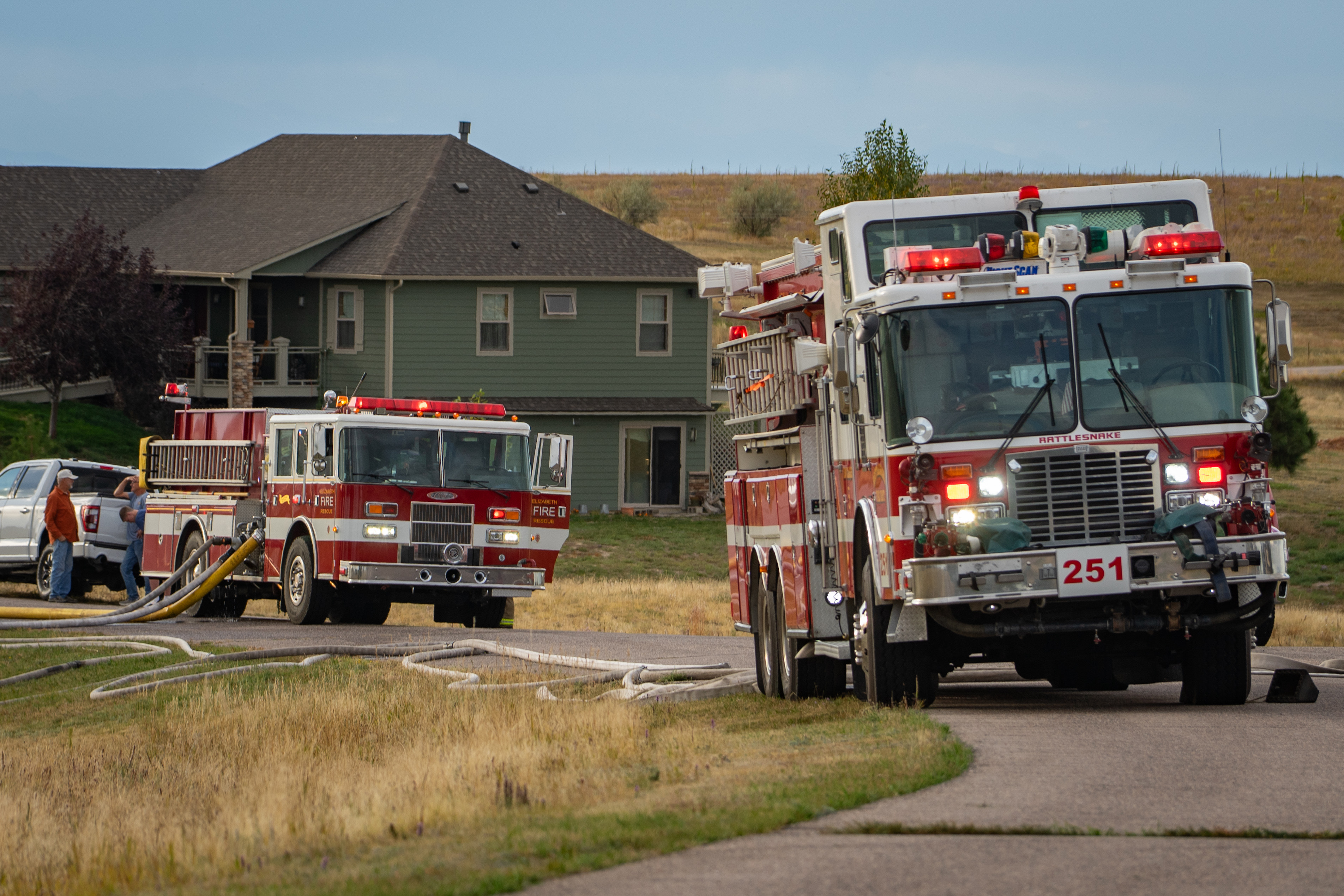

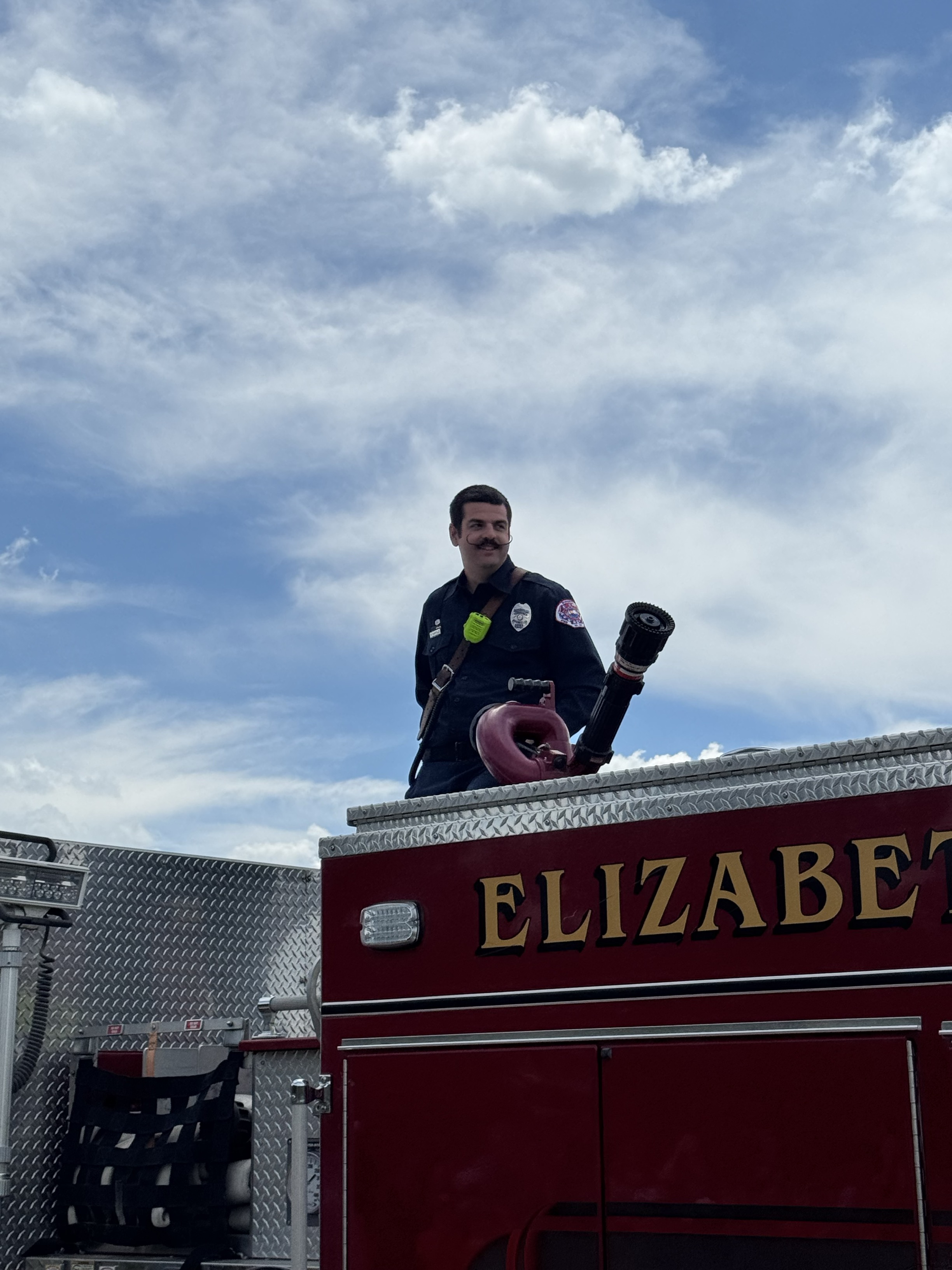
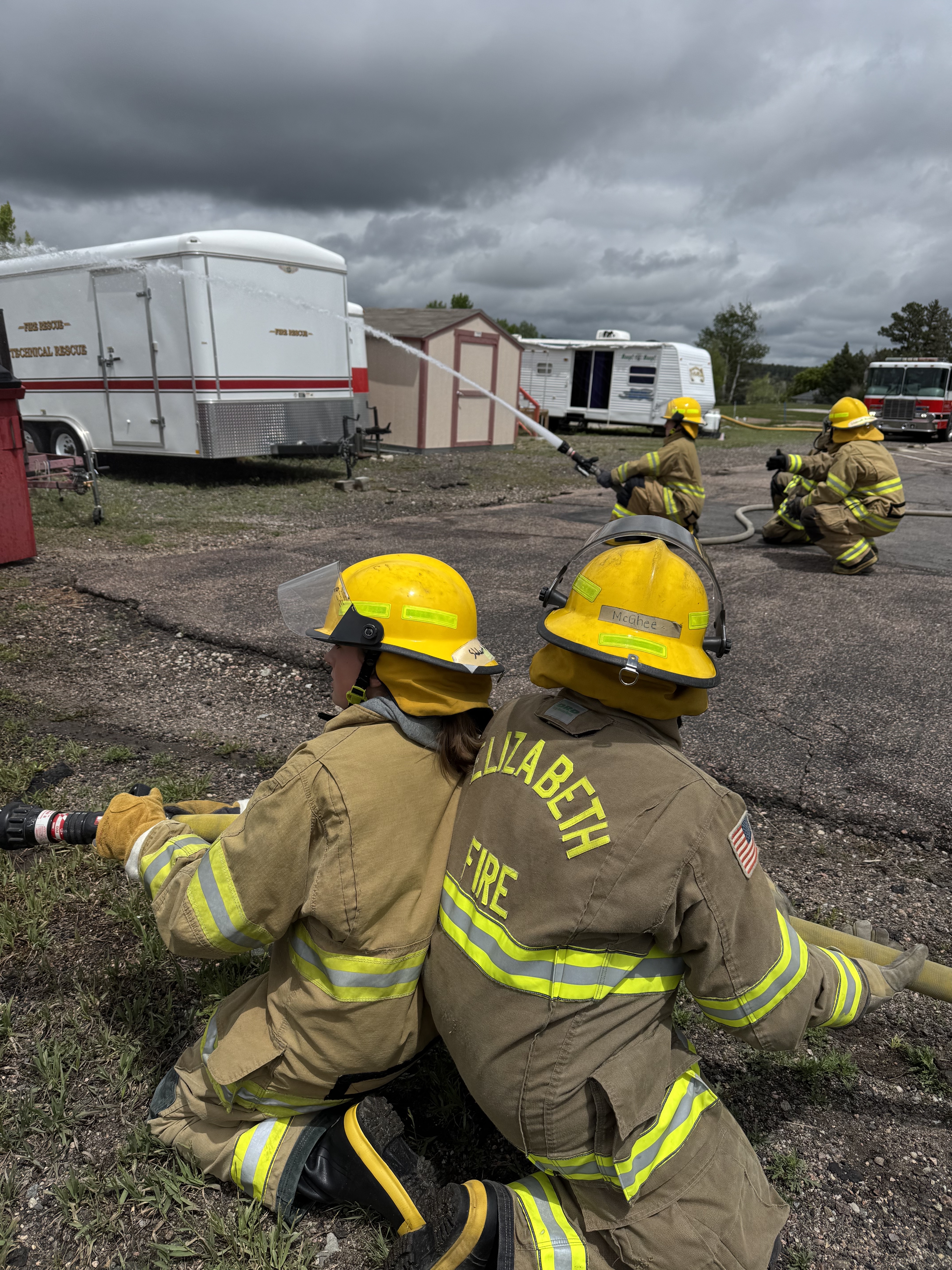
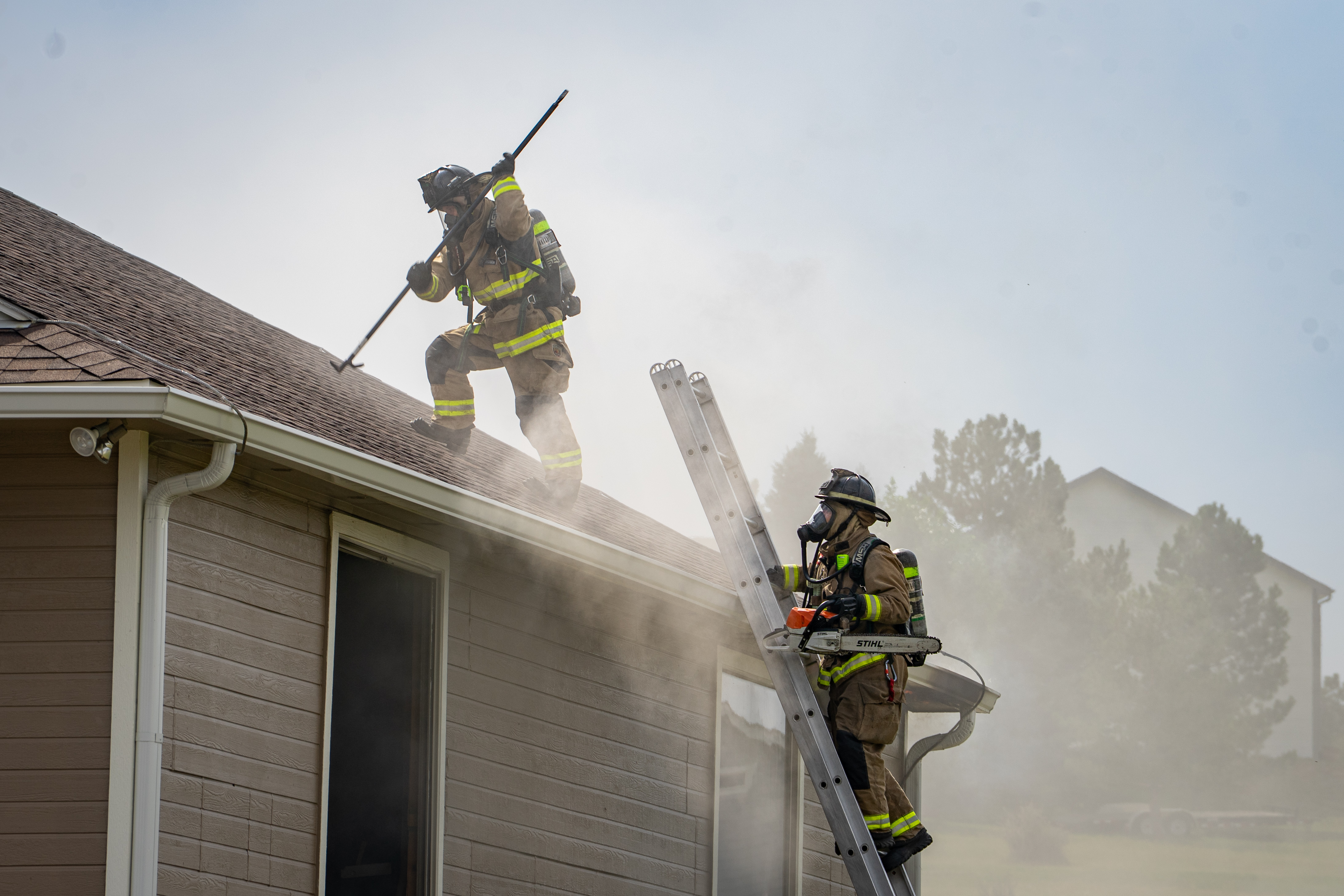
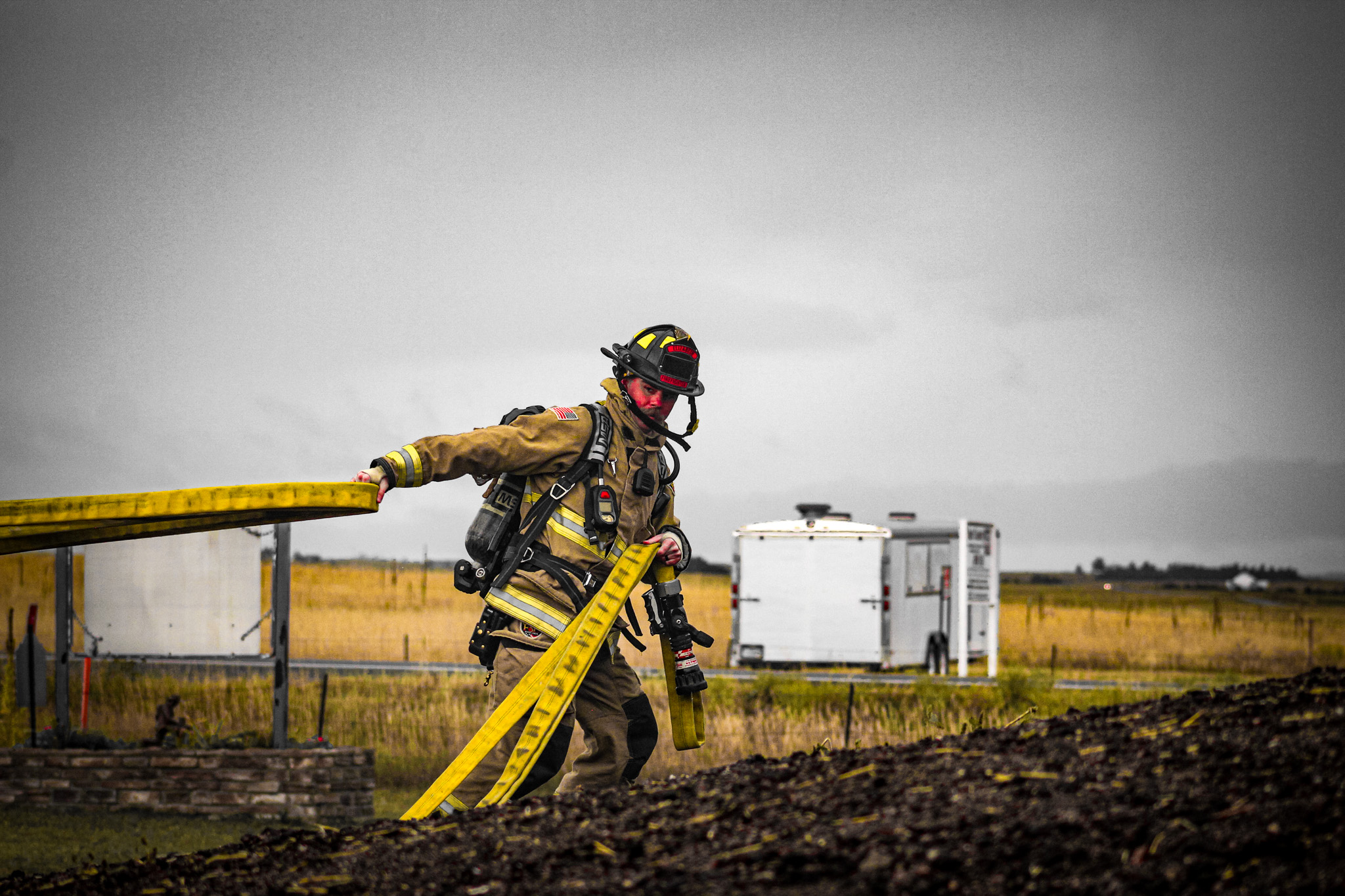
Photos of various fire department activities throughout the year